
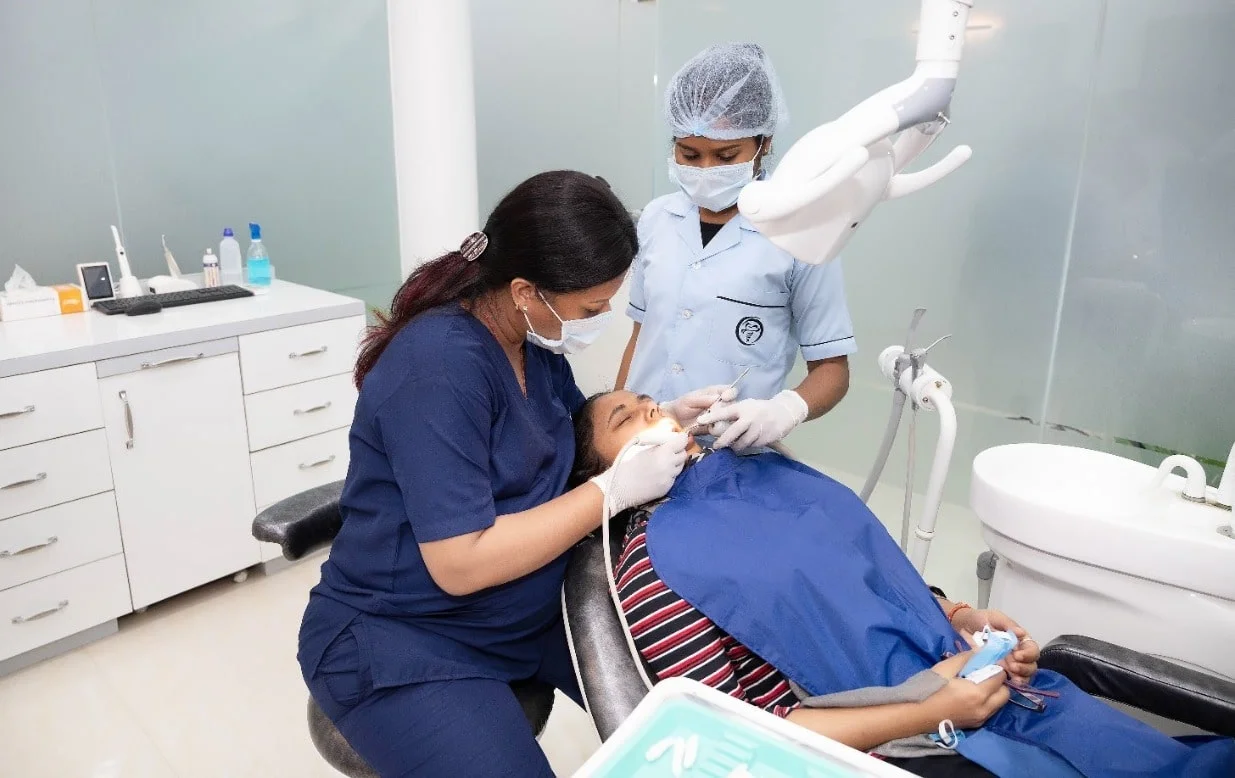
Why Adults Are Often Ideal Aligner Patients
Adult aligner patients bring something that younger patients often do not: genuine motivation and consistent compliance. Clear aligners require the patient to wear the trays for 20 to 22 hours each day and to maintain the discipline of removing and replacing them consistently. Adults who have decided to pursue orthodontic treatment have typically thought about it for some time, are committed to the outcome, and maintain the routine reliably. The compliance rates in adult aligner patients are consistently higher than in teenagers, which translates directly into better outcomes and treatment progress that matches the planned timeline.
Adult teeth are also fully developed and have stopped growing, which makes treatment planning more precise and predictable. In growing patients, the position of teeth can change as the jaw develops, sometimes requiring treatment plan adjustments. In adults, the skeletal framework is stable, and the tooth movements planned at the outset can be executed with confidence that the target positions are accurate.
What Alignment Issues Can Aligners Correct in Adults?
Clear aligners can address a wide range of alignment issues in adult patients, including:
- Crowding — where teeth overlap or are pushed out of position due to insufficient space
- Spacing — gaps between teeth
- Overbite — where the upper front teeth cover too much of the lower front teeth
- Underbite — where the lower teeth protrude in front of the upper teeth
- Crossbite — where upper and lower teeth do not meet correctly
A particularly common presentation in adult patients is relapse — teeth that were straightened with braces in adolescence but have subsequently drifted back toward their original positions because the patient did not consistently wear their retainer. Clear aligners are an excellent solution for relapse cases, as the movements required are typically less extensive than the original treatment and can often be completed in a relatively short timeframe.
What Aligners Cannot Correct in Adults
Honesty matters here. Clear aligners are not a solution for every alignment problem. Severe skeletal discrepancies — where the upper and lower jaws are significantly misaligned relative to each other — cannot be corrected with aligners alone and typically require a combination of orthodontic treatment and orthognathic (jaw) surgery. Very severe crowding may require tooth extraction and complex orthodontic movement that is better managed with fixed appliances. Some patients with significant bite problems require forces that only fixed braces can generate.
At Perfect 32, the consultation for aligner service in Ranchi includes an honest clinical assessment of whether aligners are the most appropriate treatment for your specific case. If aligners are not the best option, the reason will be clearly explained and alternative approaches discussed. There is no benefit to recommending a treatment that will not deliver the best possible outcome for the patient.
The Professional and Social Dimension
For working adults in Ranchi, one of the most compelling advantages of clear aligners is the ability to undergo orthodontic treatment without the appearance of braces affecting professional or social interactions. Adults in client-facing roles, in teaching, in business, in media, or in any context where appearance matters professionally have a legitimate concern about wearing visible metal brackets and wires for 18 to 24 months.
Clear aligners address this concern directly. In normal conversational situations and in most professional contexts, clear aligners are not visible. While someone paying close attention might notice a slight gleam from the aligner surface in certain lighting conditions, the difference compared to metal braces is enormous. Most adult aligner patients report that colleagues, clients, and acquaintances either do not notice the aligners at all, or notice only when the patient mentions them.
How Aligners Affect Speech for Adults
The most commonly reported adjustment during the first week of aligner wear is a slight lisp or change in speech patterns. The aligners add a small amount of material between the tongue and the back of the front teeth, which affects the production of certain sounds — particularly 's' and 'th' sounds. For most adults, this adjustment is complete within one to two weeks as the tongue adapts to the presence of the aligners.
Adults who use their voice professionally — teachers, lawyers, sales professionals, public speakers — sometimes express concern about this adjustment period. In practice, the adjustment is rarely as noticeable to listeners as it is to the speaker. Recording and listening to yourself during the first week can be reassuring. If speech is a particular concern, it is worth discussing with your clinician whether the speech adjustment period can be managed around any specific professional commitments.
Oral Hygiene and Adult Aligner Patients
Adults tend to have better established oral hygiene routines than teenagers, and clear aligners integrate naturally with these routines. The aligners are removed for brushing and flossing, so the cleaning process is unchanged from normal. The aligners themselves should be rinsed when removed and cleaned gently with a soft brush — not toothpaste, which can be abrasive, but a diluted cleaning solution or the specific cleaner recommended by your clinician.
One important consideration for adult aligner patients is that the oral health baseline must be sound before treatment begins. Any existing decay must be treated, active gum disease must be addressed, and any failing restorations must be managed before aligners are placed. Moving teeth with compromised periodontal support can accelerate bone loss. Your dentist will conduct a thorough examination before beginning aligner treatment to ensure these conditions are met.
How Long Does Adult Aligner Treatment Take?
Treatment duration depends entirely on the complexity of the alignment issues being corrected. Minor corrections — small gaps, minor crowding in one area, mild relapse — can be completed in as little as 3 to 6 months. Moderate cases involving multiple alignment issues across both arches typically take 9 to 14 months. More complex cases may take 16 to 20 months or longer.
During the consultation, a digital simulation of the planned tooth movements is generated, and the estimated number of trays and duration of treatment is communicated clearly. Patients should treat this as an estimate rather than a guarantee — individual response to aligner forces varies, and some refinement trays may be required toward the end of treatment to fine-tune final positions.
Life After Aligners — The Retention Phase
Completing your aligner series is not the end of treatment — it is the end of the active phase. Teeth have a natural tendency to return toward their original positions after orthodontic movement, driven by the elastic fibres in the gum tissue and the bone remodelling process. Retainers — either removable clear retainers similar to aligners, or fixed wire retainers bonded behind the front teeth — are essential to maintain the result.
Most patients are advised to wear removable retainers full-time for the first few months after completing their aligner series, and then at night indefinitely. Patients who do not wear their retainers consistently will experience some degree of relapse. This is not a failure of the aligner treatment — it is a predictable biological response that retainers are specifically designed to prevent. Long-term retainer wear is considered part of every orthodontic treatment, not an afterthought.
Conclusion
It is genuinely never too late to straighten your teeth with clear aligners. Adults in Ranchi who are considering this treatment will find that the experience is more comfortable, more discreet, and more compatible with professional life than they may have assumed. To book your clear aligner consultation at Perfect 32, call +91 6204522473 or visit perfect32ranchi.com.