
How Traditional Metal Braces Work
Metal braces consist of stainless steel brackets bonded directly to the front surface of each tooth with dental adhesive. A metal archwire runs through slots in each bracket and is held in place with small elastic bands or metal ligatures. The orthodontist periodically tightens or replaces the wire, increasing the tension and gradually moving teeth into the planned positions. The bracket-and-wire system provides continuous, controlled force across all teeth simultaneously.
Braces are fixed for the entire duration of treatment — typically 18 to 30 months, though cases vary. They cannot be removed by the patient. Every orthodontic appointment involves adjusting the wire and checking progress. The force applied by braces is consistent and does not depend on patient compliance once the braces are in place. This is both a strength and a limitation of the system.
How Clear Aligners Work
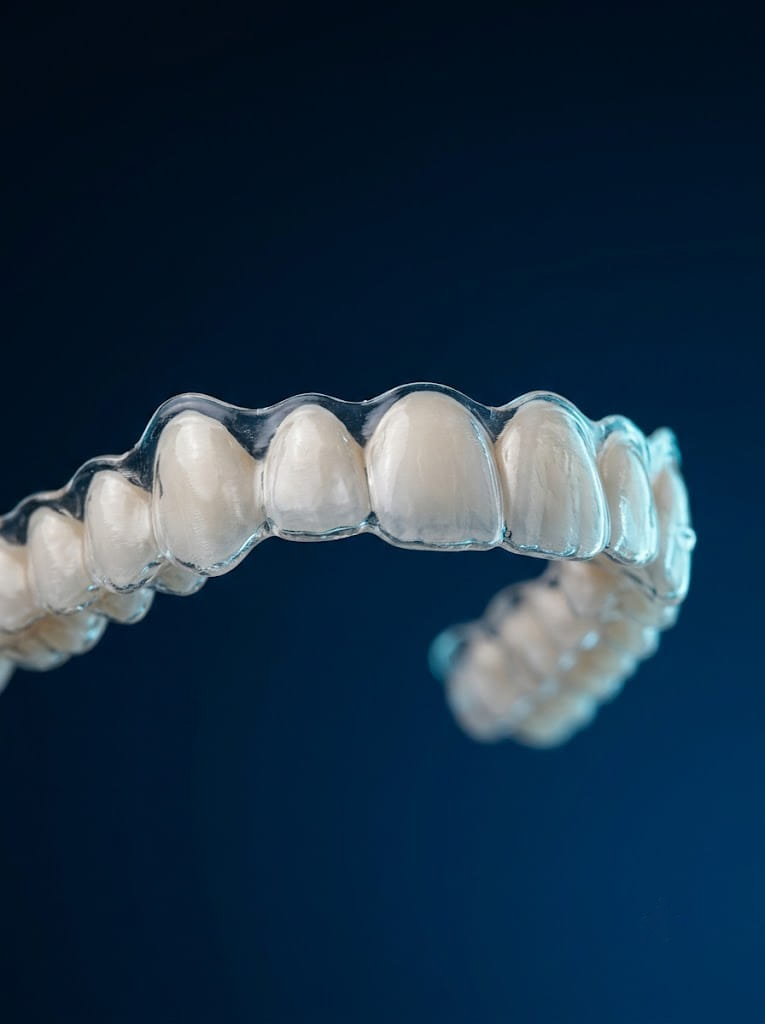
Clear aligners are a series of custom-fabricated, transparent thermoplastic trays that fit precisely over the teeth. Each tray is marginally different from the previous one, applying gentle, controlled force to specific teeth to move them in a pre-planned sequence. The patient progresses through the series of trays — changing to the next one every one to two weeks — with each tray moving teeth a fraction of a millimetre closer to the planned final position.
Aligners are fully removable. The patient takes them out to eat, drink anything other than water, and to brush and floss. For treatment to progress on schedule, the aligners must be worn for 20 to 22 hours per day. The total number of trays in a treatment series depends on the complexity of the case — mild cases may require 10 to 20 trays, more involved cases 30 to 50 or more. Clear aligner service in Ranchi at Perfect 32 uses advanced digital scanning and planning to map out the full treatment sequence before a single tray is produced.
Appearance — Often the Primary Factor for Adults
For adults and working professionals, the appearance of orthodontic treatment during the months or years it takes is a major practical consideration. Metal braces are highly visible — the brackets and wires are prominent on the teeth, and while ceramic or tooth-coloured brackets reduce visibility somewhat, they are still noticeable in conversation and in photographs.
Clear aligners are, in normal lighting and at normal conversational distances, virtually invisible. The transparent plastic fits closely over the teeth and does not catch light in the same way that metal brackets and wires do. Most adults wearing clear aligners report that colleagues and acquaintances either do not notice at all, or notice only when specifically told to look closely. For patients whose professional or social life makes visible orthodontic treatment uncomfortable, aligners are the clear practical choice.
Comfort — Day-to-Day Experience During Treatment
Metal braces produce specific discomfort patterns that most patients adapt to but never fully enjoy. The brackets and wire edges can irritate and ulcerate the inside of the cheeks and lips, particularly in the days following an adjustment appointment when new pressure is applied. Orthodontic wax can be used to cover sharp edges, but the irritation is an inherent feature of the system. Adjustment appointments typically produce soreness for 2 to 4 days as the teeth respond to the new wire tension.
Clear aligners produce a different type of discomfort. Each new tray creates a sense of pressure — sometimes described as tightness — for the first day or two of use, as the tray is slightly ahead of where the teeth currently sit. This pressure diminishes quickly as the teeth respond. There are no sharp edges, no brackets to irritate soft tissues, and no wires to break or come loose. Most aligner patients rate their overall comfort during treatment as higher than braces patients do, though individual experience varies.
Oral Hygiene During Treatment — A Significant Practical Difference
Maintaining good oral hygiene with metal braces is genuinely more difficult than without them. The brackets and wires create multiple areas where plaque accumulates and is difficult to remove with a standard toothbrush. Interdental brushes, special orthodontic brushes, and sometimes water flossers are required to clean effectively around the brackets. If hygiene is neglected, decalcification (white spots) can form on the tooth surface adjacent to brackets, leaving permanent marks on the enamel that are visible after the braces are removed.
Clear aligners are removed for brushing and flossing, meaning oral hygiene is maintained exactly as before treatment. The trays themselves are rinsed and cleaned separately. This means that patients on aligners enter and complete treatment with the same oral hygiene habits they had before, rather than having to learn a more complex routine. For patients who already struggle to maintain thorough oral hygiene, this is a meaningful practical advantage.
Dietary Restrictions
With braces, hard foods that can dislodge brackets or bend wires need to be modified or avoided, including:
- Nuts
- Raw carrots and apples
- Hard crackers and crusty bread
Clear aligners are removed for eating, which means there are absolutely no dietary restrictions. The patient eats whatever they choose, rinses or brushes their teeth, and replaces the aligners. The only discipline required around eating is the commitment to removing and replacing the aligners every time — a habit that most patients report becoming automatic within the first two weeks of treatment.
Compliance and Discipline
This is the most honest section of this comparison. Braces work without patient compliance once they are fitted — the wire does its job regardless of what the patient does, short of eating foods that damage the hardware. Aligners require consistent, daily commitment. Patients who regularly forget to replace their aligners after meals, or who remove them more often than guidelines recommend, will find that their treatment takes longer than planned, or that teeth do not move as expected.
For patients who are self-disciplined and motivated — which describes most adults seeking aligner service in Ranchi — compliance is rarely a problem. For younger patients or those who struggle with routine adherence, braces may be the more reliable option. An honest discussion about compliance expectations is part of the consultation process at Perfect 32.
Which Cases Are Better Suited to Each?
Modern clear aligner systems are capable of correcting a wider range of cases than early-generation systems could. Mild to moderate crowding, spacing, overbite, underbite, and crossbite cases are all manageable with aligners in the hands of a skilled clinician. Very severe crowding, skeletal discrepancies requiring jaw surgery, and certain complex bite correction cases are better managed with fixed appliances such as braces.
The determination of which system is clinically appropriate for a specific patient requires a clinical examination, digital scan, and X-rays — not a checklist. At Perfect 32 in Ranchi, the initial aligner consultation includes this full assessment so that patients receive an honest, individualised recommendation rather than a generic one.
Conclusion
Both metal braces and clear aligners are effective orthodontic treatments. For adults who prioritise discretion, comfort, and flexibility during treatment, and whose case is clinically suitable, clear aligners are the superior choice in most respects. To find out whether aligner service in Ranchi at Perfect 32 is right for your case, call +91 6204522473 or visit perfect32ranchi.com to book your consultation.