
Step 1 — The Initial Consultation
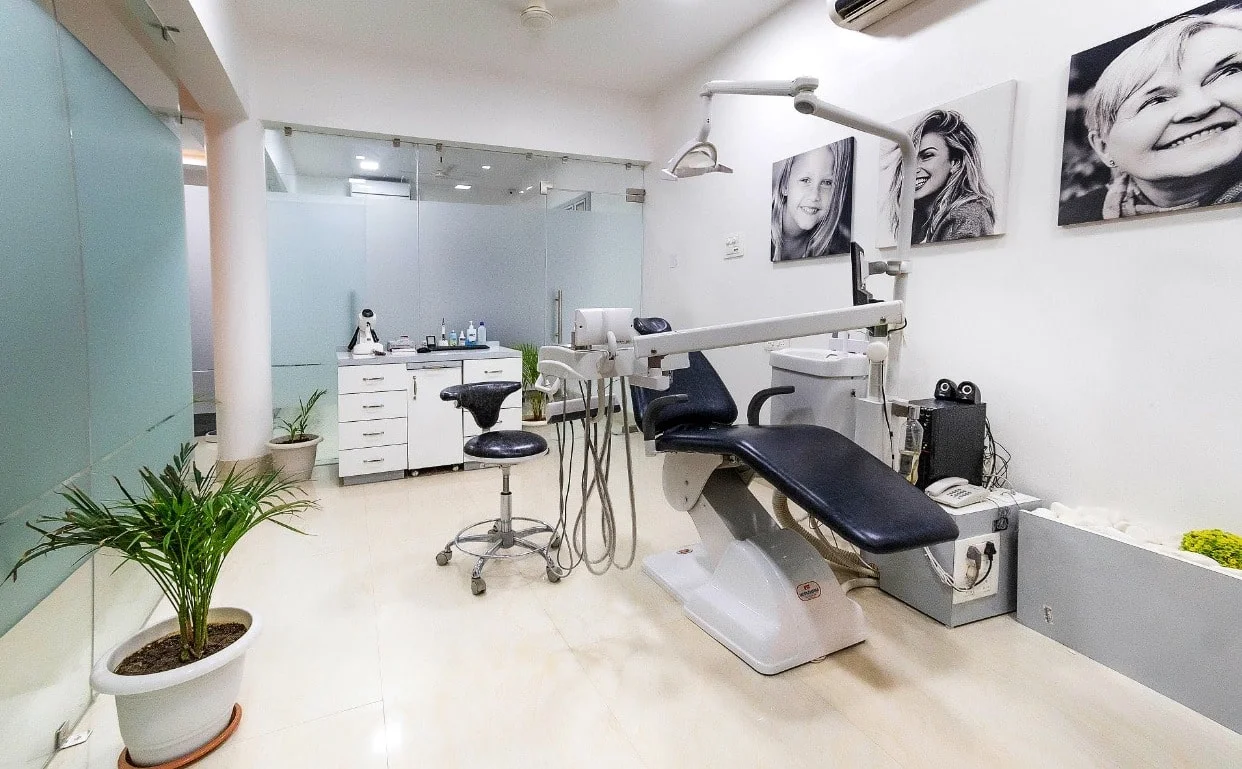
The aligner journey begins with a clinical consultation at which the dentist examines your teeth, gums, and bite in detail. This is not a brief assessment — a thorough evaluation includes:
- Visual examination of all teeth, checking for decay, gum disease, and existing restorations
- An assessment of the bite relationship between upper and lower teeth
- An evaluation of the gum tissue and bone support
- An initial assessment of what alignment issues are present and whether they are suitable for aligner treatment
This consultation is also the opportunity to discuss your goals. What bothers you most about your current alignment? Do you have a specific aesthetic concern, or are there functional issues such as difficulty cleaning between crowded teeth? Understanding your priorities allows the clinician to focus the treatment plan on what matters most to you, and to be honest about what is and is not achievable with aligners in your specific case.
Step 2 — Digital Scanning and Records
If aligner treatment is appropriate for your case, the next step is taking the records needed to plan your treatment. Modern aligner planning uses intraoral digital scanning — a small scanning wand is passed over all teeth surfaces in the mouth, capturing a highly accurate three-dimensional digital model of your teeth in seconds. There are no messy impression materials and no gagging. The resulting digital model is precise to fractions of a millimetre.
In addition to the digital scan, photographs of your teeth and face are taken from multiple angles, and dental X-rays are taken if not already current. These records give the clinician a complete picture of the clinical situation — not just what is visible from outside, but the bone levels around each tooth, the root positions, and any underlying dental issues that need to be addressed before treatment begins.
Step 3 — Treatment Planning and Digital Simulation
The digital records are used to create a three-dimensional treatment plan using specialised orthodontic software. The clinician maps out the movement of each tooth, in sequence, from its current position to its planned final position. The software calculates the number of aligners required, the movement each tray produces, and the estimated total treatment duration.
One of the most valued features of modern aligner systems is the ability to generate a digital simulation showing the planned tooth movements and the expected final result. Patients at Perfect 32 receiving aligner service in Ranchi are shown this simulation at the treatment planning stage — you see what your teeth are expected to look like at the end of treatment before a single aligner is fabricated. This allows the plan to be refined based on your feedback about the expected outcome, ensuring alignment between the clinical plan and your personal goals.
Step 4 — Fabrication of Your Custom Aligners
Once the treatment plan is finalised and approved, the digital models are used to fabricate your custom series of aligners. Each aligner in the series corresponds to a specific stage of tooth movement and is slightly different from the previous one — each tray is a small step ahead of where the teeth currently sit, which is what creates the gentle force that moves the teeth.
The aligners are made from medical-grade thermoplastic material that is transparent, durable, and precisely thermoformed over the digital models. Depending on the system used and your location, fabrication typically takes 2 to 4 weeks from the time the digital plan is finalised. You will receive your initial set of trays at your next appointment, along with detailed instructions for wear and care.
Step 5 — Fitting Attachments If Required
Before receiving your first aligner, you may have small tooth-coloured composite attachments bonded to certain teeth. These attachments — which look like tiny dots or geometric shapes on the tooth surface — give the aligner additional grip points and allow more precise control of certain tooth movements, particularly rotations and extrusions (moving a tooth downward to the correct height). They are matched to your tooth colour as closely as possible and are barely noticeable in normal lighting.
Not every patient requires attachments — they are used where the planned tooth movements require them. At the end of treatment, the attachments are polished off the tooth surface, leaving no permanent change to the tooth structure.
Step 6 — Wearing Your Aligners
Aligners must be worn for 20 to 22 hours per day — every day, for the duration of treatment. The remaining 2 to 4 hours accounts for mealtimes, coffee breaks, and the time needed to brush and floss before replacing the trays. The discipline of wearing aligners consistently is the most important thing you can do to ensure your treatment progresses on schedule.
You change to the next tray in your series every 1 to 2 weeks, as directed by your clinician. The exact interval is determined by the complexity of each movement and how quickly your teeth respond. Some trays are worn for 7 days, others for 14 days — your treatment plan will specify the interval for each tray. Progressing to the next tray before a tooth has fully reached its planned position is a common cause of unsatisfactory results, so it is important to follow the schedule your clinician has designed.
Step 7 — Progress Check-Ups Every 6 to 8 Weeks
You will attend check-up appointments at Perfect 32 approximately every 6 to 8 weeks throughout your aligner treatment. These appointments are typically shorter than those required for braces adjustments — there is no wire tightening, no bracket checking, and no adhesive to manage. The clinician examines your teeth to confirm that movement is progressing as planned, checks the fit of the current aligner, and provides your next set of trays.
These appointments are also the opportunity to raise any concerns — a tray that seems to fit poorly, a tooth that does not appear to be moving, or discomfort that seems unusual. Aligner treatment is a collaborative process, and the clinician's ability to monitor progress and make adjustments when needed is an essential part of getting the best possible result.
Step 8 — Refinements If Needed
After completing the final aligner in the planned series, the clinician evaluates the result against the original treatment plan. In many cases, the teeth are exactly where planned and no further work is required. In some cases, one or more teeth have not moved fully as expected, or the treatment goals have evolved during the course of treatment. In these situations, a refinement is undertaken — a new digital scan is taken, a new set of refinement aligners is planned, and additional trays are fabricated to complete the result.
Refinements are a normal and expected part of aligner treatment rather than a failure. Tooth biology varies between individuals, and some teeth respond more slowly or differently than the software predicts. The willingness to complete a thorough refinement phase rather than declaring treatment finished when it is almost-but-not-quite right is a mark of clinical quality.
Step 9 — Retainers for Permanent Maintenance
The active phase of aligner treatment ends when the final tray is complete and the clinician is satisfied with the result. But the treatment is not truly finished. Teeth that have been moved orthodontically have a biological tendency to drift back toward their pre-treatment positions — a phenomenon called relapse — driven by the elastic fibres in the gum tissue and the ongoing remodelling of the bone around the tooth roots.
Retainers prevent relapse. Options include removable clear retainers (similar to aligners) worn nightly, or fixed bonded retainers — thin wires bonded to the backs of the front teeth that hold them in place permanently without requiring any daily patient action. Most patients use a combination of both. The retention phase is indefinite — the recommended standard is nightly wear of removable retainers for life, or permanent bonded retainers with regular monitoring. Patients who do not retain their results will experience some degree of relapse over months and years.
Conclusion
Clear aligner treatment is a sophisticated, well-established process that produces outstanding results when carried out by an experienced clinician and committed patient. At Perfect 32 in Ranchi, aligner service is delivered with digital precision, thorough planning, and the clinical oversight that ensures your result matches the original promise. Call +91 6204522473 or visit perfect32ranchi.com to start your aligner consultation.